

Bakuchiol vs. Retinol: An Honest Comparison from an Ayurvedic Formulator
Last year, when I turned 40, I decided it was time to explore anti-aging skincare. The beauty industry says you should start much earlier, but I found myself researching ingredients anyway—and retinol was the first to catch my attention.
If you’ve looked into anti-aging skincare, you’ve probably seen retinol mentioned everywhere. It’s often called the gold standard for skin renewal, backed by lots of research. Dermatologists and magazine editors recommend it, but it doesn’t work for everyone. As someone who believes in Ayurveda, I prefer natural ingredients over lab-made ones.
My dermatologist suggested I try retinol, but I firmly said no.
I didn’t want to risk redness, peeling, sensitivity to sunlight, breakouts, and months of waiting for results. I also learned that retinol raises safety concerns for women who are pregnant, trying to conceive, or dealing with hormonal issues, which is especially important to me.
While researching Ayurvedic herbal remedies, I discovered Bakuchiol. It’s known as the “natural retinol alternative,” and this time, the science supports the hype. I also remembered my grandmother using bakuchiol for neck and face massages, which made everything feel connected.
This post is a straightforward comparison from a formulator who chose bakuchiol on purpose and created a product with it.

What Retinol Actually Does — And Why It’s Effective
Retinol is a type of Vitamin A. When you apply it, your skin’s enzymes convert it into retinoic acid, the active form. This process speeds up skin renewal, boosts collagen, and helps control melanin production to reduce dark spots.
When retinol works, you get smoother skin, fewer fine lines, a more even tone, and firmer skin. These results are backed by decades of clinical research.
The challenge with retinol is how it’s converted in the skin and the concentration at which it's used. Over-the-counter products work, but the conversion process can cause irritation, especially at higher strengths. This can lead to sensitive skin, disrupted barriers, and the flaking, redness, and breakouts that make retinol hard to begin.
Retinol also makes skin more sensitive to sunlight because it breaks down in UV light. That’s why it’s only used at night and needs a strong SPF during the day.
What Bakuchiol Is — And Where It Comes From
Bakuchiol (buh-KOO-chee-ol) is a compound taken from the seeds of Psoralea corylifolia, a plant used for centuries in Ayurveda and Traditional Chinese medicine. In Ayurveda, Babchi is used to treat skin conditions such as vitiligo, psoriasis, and inflammation.
Interest in bakuchiol as a retinol alternative grew after a 2018 study in the British Journal of Dermatology. In a 12-week trial, both bakuchiol and retinol reduced fine lines, wrinkles and improved skin tone, but bakuchiol caused less irritation and photosensitivity.
Research shows that bakuchiol activates the same retinol receptor pathways without needing the same conversion steps. It works like retinol but uses a different molecule, so it can give similar results with less irritation.
Bakuchiol vs. Retinol: The Direct Comparison
Mechanism of Action
Retinol must be converted by skin enzymes into retinaldehyde, which is then converted into retinoic acid before it becomes biologically active. This multi-step process is where most irritation occurs. Bakuchiol appears to activate retinol receptors more directly, bypassing some of these conversion steps. Both compounds ultimately influence cellular turnover and collagen synthesis, but through different chemical pathways.
Irritation and Skin Sensitivity
The biggest difference is how each affects your skin. Retinol often causes dryness, flaking, redness, and breakouts at first. Bakuchiol, on the other hand, causes much less irritation, making it a good option for sensitive or rosacea-prone skin and for people who can’t tolerate retinol.
Sun Safety and Daytime Use
Retinol breaks down in sunlight, making skin more sensitive to UV, so it’s not recommended for daytime use. Bakuchiol stays stable in daylight and doesn’t increase photosensitivity, so you can use it morning and night. Daily SPF is still important, no matter which serum you use.
Safety During Pregnancy, Fertility Treatment, and Breastfeeding
This part matters most for many women. Retinoids, including retinol, can cause birth defects at high doses. Prescription retinoids like Accutane and tretinoin are not safe during pregnancy. Even though low-dose topical retinol is less risky, most doctors recommend stopping all retinoids when trying to conceive, during pregnancy, and breastfeeding.
Bakuchiol doesn’t have these risks. It’s plant-based and has no known effects on pregnancy or hormones. For women in fertility treatment, pregnant, breastfeeding, or advised to avoid retinoids, bakuchiol is a safe, clinically supported alternative that offers real anti-aging benefits.
This is a personal reason why I started Aroota. After my own fertility journey, I created the Supercharge Bakuchiol Serum for women who want results without risking their hormonal health.
Speed of Results
Retinol usually shows results in 4 to 12 weeks, but the early weeks can be tough due to irritation. Bakuchiol works on a similar timeline, as shown in clinical trials. Neither ingredient gives instant results; both need consistent use.
Ingredient Purity and Formula Context
Most comparisons end here, but from a formulator’s view, the other ingredients in a bakuchiol or retinol serum are just as important.
Retinol serums usually contain stabilizers, penetration enhancers, synthetic emulsifiers, and preservatives such as parabens to prevent retinol from breaking down. The experience of using retinol serum depends as much on these supporting ingredients and their safety as on the retinol itself.
Aroota’s Supercharge Bakuchiol Serum has just six ingredients: Apricot Kernel Oil, Bakuchiol Oil, Buriti Oil, Blue Yarrow Oil, Jasmine Absolute, and Vitamin E. There are no preservatives because the formula doesn’t contain water, which causes instability.
Bakuchiol is stable, so no synthetic stabilizers are needed. There’s no synthetic fragrance, parabens, phthalates, or mineral oil.
The simple formula isn’t just for marketing. It’s because bakuchiol is stable and plant-based, so it doesn’t need extra chemicals to work.

Who Should Choose Bakuchiol Over Retinol
Bakuchiol is the better choice if you:
- Have sensitive, reactive, or rosacea-prone skin that has not tolerated retinol.
- Are you pregnant, breastfeeding, or actively trying to conceive
- Are undergoing fertility treatment and have been advised to minimize chemical exposure
- Have a hormonal condition such as PCOS or endometriosis and prefer to avoid endocrine-disrupting ingredients.
- Are new to anti-aging serums and want to avoid the retinol purge and adjustment period
- Use your serum in both morning and evening routines (retinol cannot be used in the AM)
- Prefer a minimal-ingredient formula without synthetic preservatives or stabilizers.
- Have oily or acne-prone skin that tends to congest from heavy formulas.
Retinol remains the right choice even though you have no sensitivity concerns, are not pregnant or in the preconception phase. if you need the highest-evidence treatment for severe photo damage or significant fine lines, and are working under dermatological supervision, I would still go for Bakuchiol Retinol Serum.
What Aroota Customers Are Saying
“I’m really loving this supercharge oil on my face as an alternative to retinol. The bakuchiol oil fragrance is amazing! I have also tried the Turmeric Balm, and it’s hydrating and smells great. All the products are natural and cruelty-free, and I’m glad my skincare routine has improved.” — Pragyna Reddy.
“I have sensitive, oily skin and struggled with retinols before. This serum feels lightweight, never causes breakouts, and my skin looks so much healthier and hydrated in the mornings.” — Verified buyer.
“Found at a farmers market and have been using for the past 3 years. As a skincare fanatic, this is easily my all-time favorite. Can’t live without. Worth every penny.” — Anonymous (3-year customer)

Frequently Asked Questions
Does bakuchiol work as well as retinol for reducing fine lines?
Clinical research, including a 12-week double-blind trial published in the British Journal of Dermatology, found that bakuchiol and retinol produced comparable improvements in fine lines, wrinkles, and skin tone. Bakuchiol produced significantly less irritation and photosensitivity. For most users, particularly those with sensitive skin or hormonal health considerations, bakuchiol delivers meaningful anti-aging results with a substantially better tolerability profile.
Can I use bakuchiol every day?
Yes. Unlike retinol, bakuchiol does not require an adjustment period and does not increase photosensitivity, so it can be used both morning and night without restriction. Starting with nightly use and gradually introducing morning use allows your skin to adjust to any new active ingredient, but bakuchiol is generally well-tolerated from the first application.
Is bakuchiol serum safe to use when pregnant?
Bakuchiol has no known teratogenic activity and no contraindications during pregnancy at topical doses used in skincare. However, we always recommend discussing any new skincare product with your OB or midwife during pregnancy. Retinoids, by contrast, are widely advised against during pregnancy and the preconception period.
Can I use bakuchiol with Vitamin C?
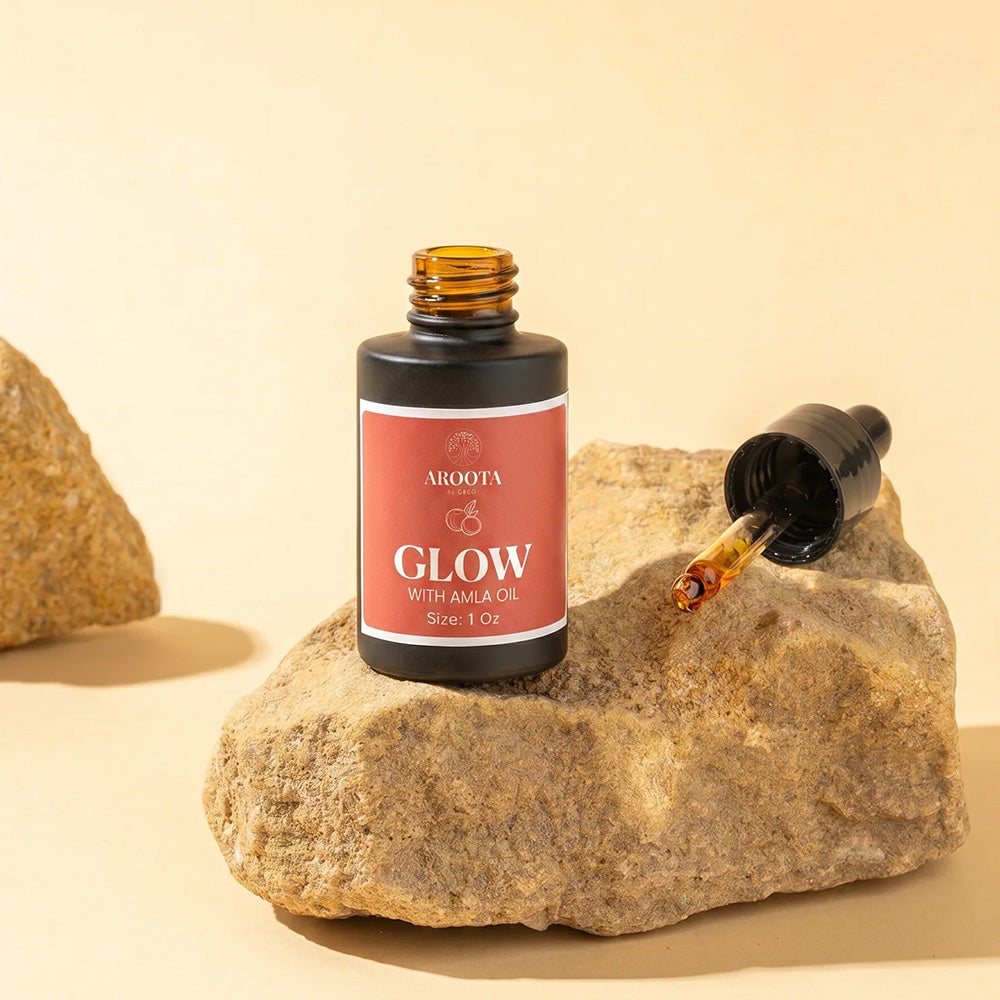
Yes, and it is an excellent combination. Vitamin C (particularly oil-soluble forms like the Tetrahexyldecyl Ascorbate in Aroota’s Glow Serum) addresses brightening, dark spots, and antioxidant protection, while bakuchiol addresses cell renewal, fine lines, and firmness. Using the Glow Serum in the morning and the Supercharge Bakuchiol Serum in the evening is the Ayurvedic AM/PM ritual Aroota is built around.
How long will it take to see results from Bakuchiol?
Visible improvements in fine lines and skin texture usually appear within 8 to 12 weeks of regular use. Results compound over time; many long-term users report that their skin continues to improve beyond the initial three-month period as cellular turnover and collagen synthesis accumulate.
Is bakuchiol good for oily or acne-prone skin?
Yes. Bakuchiol is non-comedogenic and does not clog pores. Aroota’s Supercharge Serum uses Apricot Kernel Oil as its base, a lightweight oil rich in linoleic and oleic acids that is well tolerated by oily and acne-prone skin types. The formula does not contain heavy silicones or occlusive mineral oils that tend to aggravate congestion.
What is the difference between bakuchiol oil and bakuchiol extract?
Bakuchiol oil is the seed oil of the Babchi plant, which naturally contains bakuchiol alongside other fatty acids. Bakuchiol extract is a more concentrated, isolated form of the bakuchiol compound. Aroota’s Supercharge Serum uses whole Bakuchiol Oil consistent with our philosophy of minimal processing and whole-plant formulation rather than isolated chemical fractions.
The Aroota Approach
Bakuchiol isn’t just a trend. It’s a plant with a long history in Ayurvedic medicine, and now Western clinical research is confirming what traditional practitioners have known for centuries.
I created the Supercharge Bakuchiol Serum because I wanted a retinol alternative I could trust, especially during a hormonally sensitive time in my life. It has six ingredients, no synthetics, and no compromises.
Ayurvedic minimalism isn’t about using fewer ingredients for marketing. It’s about a real commitment; each ingredient is carefully selected and listed clearly on the label.
→ Shop the Supercharge Bakuchiol Anti-Aging Serum
→ Shop the Glow Vitamin C Brightening Serum
→ Read: What Are Endocrine Disruptors in Personal Care?
→ Shop the Glow Vitamin C Brightening Serum
→ Read: What Are Endocrine Disruptors in Personal Care?


Leave a comment
This site is protected by hCaptcha and the hCaptcha Privacy Policy and Terms of Service apply.